
A blog writing virtual assistant enables full-scale content delegation – spanning editorial planning, SEO-optimized drafting, CMS publishing, and performance analytics – without sacrificing brand-voice integrity or authorial authenticity. By deploying asynchronous content workflows, style-guide documentation, and iterative voice calibration protocols, business owners can systematically transfer their entire blogging operation to a trained remote content specialist. The result is a scalable, consistently on-brand content engine that operates independently of the founder’s time and bandwidth.

If you have been running your business blog on willpower, squeezing writing sessions between client calls and product launches, you already know this is not sustainable. The question is never whether to delegate – it is how to delegate without losing the personality that makes your audience trust you. This article walks you through every step of doing exactly that.
Why Founders Struggle to Scale Their Blog (And Why Delegation Is the Fix)
Most business owners start their blog with the best intentions. Early posts are passionate, personal, and genuine. Then reality sets in: deadlines multiply, the content calendar slips, and posts become infrequent, inconsistent, or outsourced to a freelancer who sounds nothing like the brand.
The core problem is not a lack of ideas. It is a structural one. Content creation is time-intensive, deadline-driven, and requires a specific combination of strategic thinking, SEO knowledge, and editorial discipline. These are precisely the skills that a professional virtual marketing assistant brings to your business.
Delegating your blog is not about abandoning your voice. It is about building a system that amplifies it.
What a Blog Writing Virtual Assistant Actually Does
A common misconception is that a virtual assistant only handles scheduling or inbox management. In the context of content marketing, a blog writing virtual assistant is a specialized remote professional who can own your entire content operation from ideation to publication.
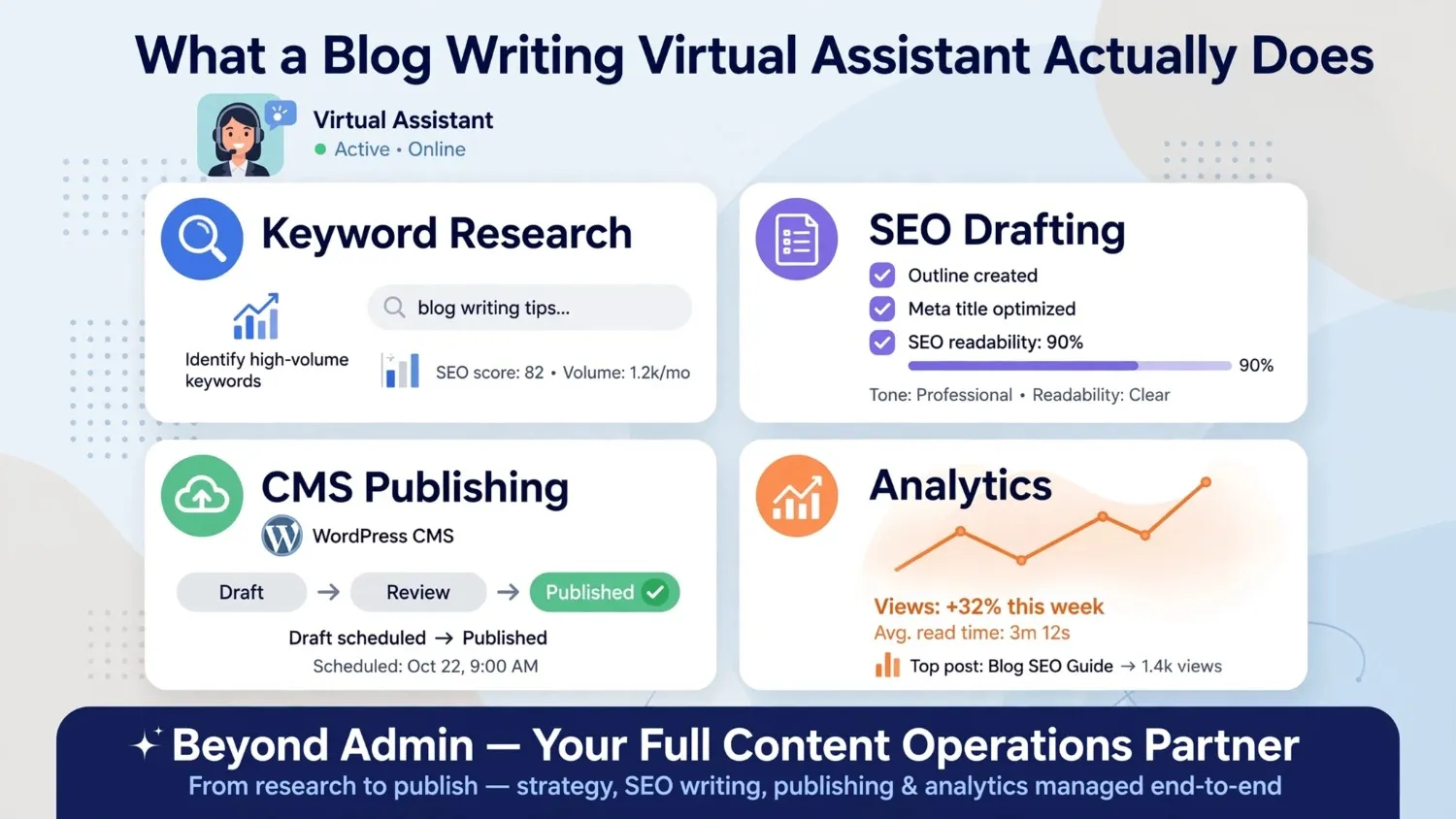
Here is a realistic breakdown of what they manage:
Keyword research and topic planning
Using tools like Ahrefs, SEMrush, or Google Search Console to identify high-opportunity topics aligned with your business goals
Content brief creation
Structuring each article with target keywords, audience intent, outline headings, and internal linking strategy
Long-form drafting
Writing SEO-optimized articles that match your brand voice and style guide
On-page SEO optimization
Filling in meta titles, meta descriptions, alt text, schema markup, and URL slugs within your CMS
CMS publishing
Uploading, formatting, and scheduling posts in WordPress, Webflow, HubSpot, or whatever platform you use
Internal and external linking
Weaving in contextually relevant links to improve site authority and user experience
Performance tracking
Monitoring rankings, organic traffic, and engagement metrics to inform future content decisions
Social repurposing
Adapting blog content into LinkedIn posts, email newsletters, or short-form social copy
This is a full content operations role, not a basic admin task.
The Voice Problem: How to Preserve Your Authentic Brand Tone
This is the concern that stops most founders from delegating their blog. Your voice is a competitive advantage. It builds trust, loyalty, and differentiation. Handing it over to someone else feels risky, and without the right system, it is.
However, the solution is not to avoid delegation. The solution is to document your voice before you delegate.
Build a Brand Voice Guide
A brand voice guide is the single most important asset you will create before onboarding a blog writing virtual assistant. It does not need to be a 50-page document. A tight, well-structured guide of 3-5 pages covers everything a skilled virtual assistant needs.
Your voice guide should include:
Tone descriptors
Three to five adjectives that define how your brand communicates (e.g., direct, empathetic, expertise-forward, lightly humorous)
Vocabulary preferences
Words and phrases you use consistently, and words you actively avoid
Sentence structure preferences
Do you prefer short punchy sentences or more analytical, layered writing?

Audience definition
Who you are writing for, their sophistication level, and their core pain points
Examples of content you love
Annotated samples from your existing best-performing posts
Examples of content you dislike
So your VA understands what to avoid
Formatting rules
How you use subheadings, bullet points, bold text, and calls to action
According to Content Marketing Institute, brands with documented content strategy are significantly more effective at content marketing than those without one. A voice guide is the foundation of that strategy.
The Calibration Process: Getting Your VA Sounding Like You
Even with a perfect voice guide, the first few articles will not sound exactly like you. That is normal and expected. What separates a great delegation process from a frustrating one is a structured calibration period.
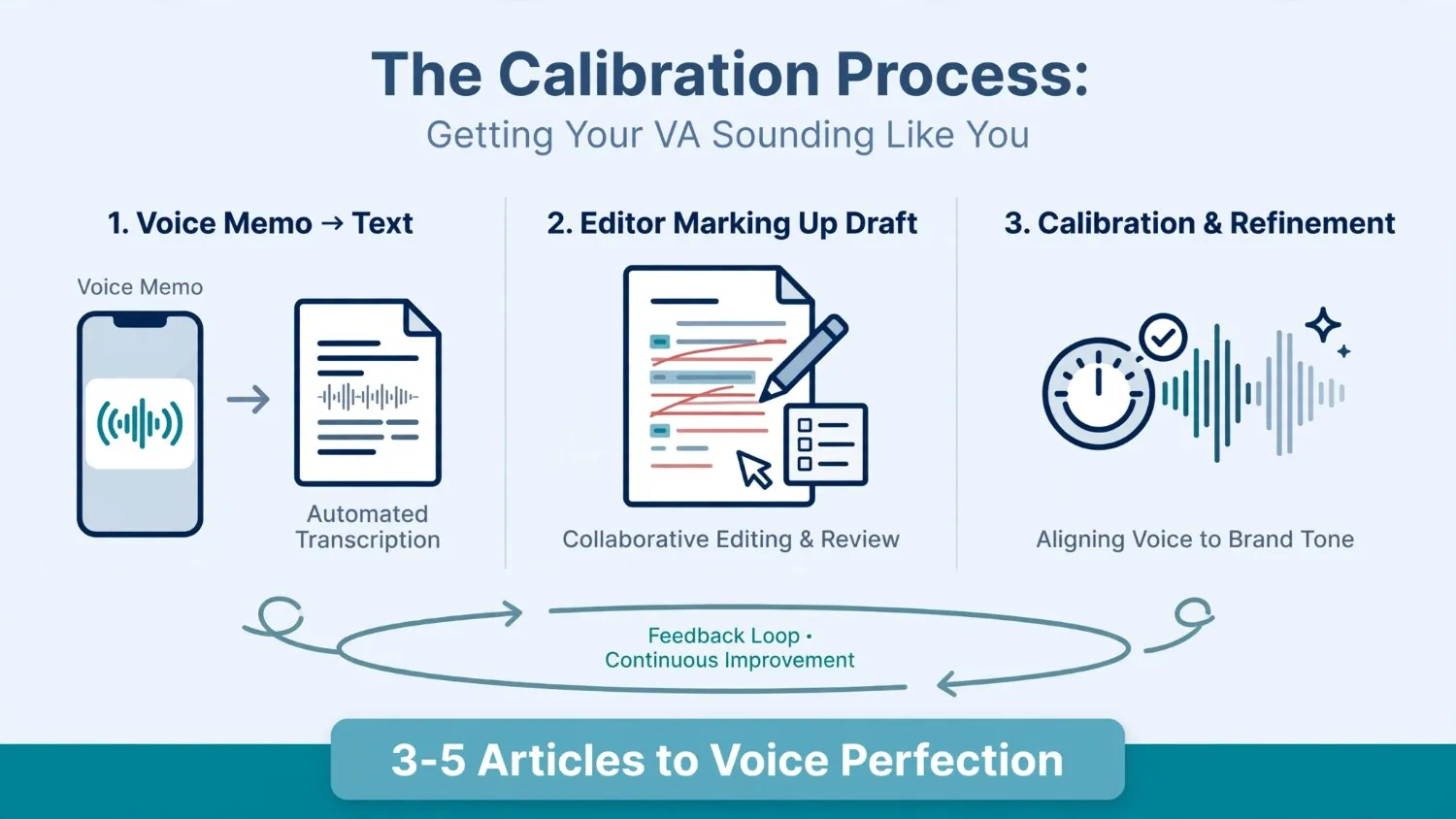
Follow this process:
Step 1: Start with a test piece
Assign a topic you know deeply so you can evaluate the draft critically
Step 2: Mark up the draft with specific edits
Do not just say “this does not sound like me”; point to specific sentences and explain why and what you would write instead
Step 3: Record a voice memo
Sometimes hearing yourself explain the edit communicates more than written feedback
Step 4: Create a “phrases I would never say” list
Update your voice guide based on what you discover in calibration
Step 5: Repeat for three to five articles
By this point, most skilled virtual assistants have internalized your voice well enough to work with minimal revision cycles
Step-by-Step: How to Delegate Your Entire Blog to a Virtual Assistant
Here is a practical, sequenced framework for handing off your full blog operation.
Step 1 – Audit Your Existing Content
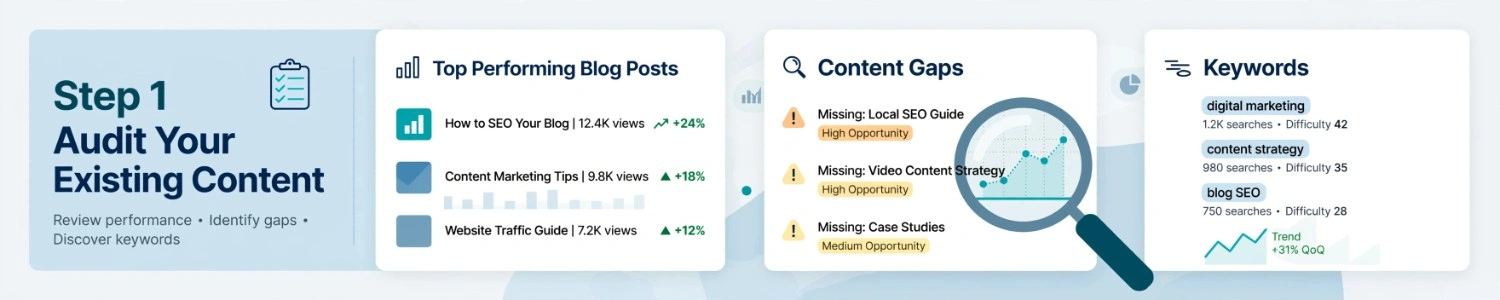
Before you hand anything over, understand what you have. Pull your top 10-15 performing posts and identify:
- What topics resonate most with your audience
- Which keywords are already generating traffic
- What your average word count, tone, and formatting look like
- Any content gaps in your current coverage
This audit gives your VA a baseline and a benchmark.
Step 2 – Document Your Systems and Access
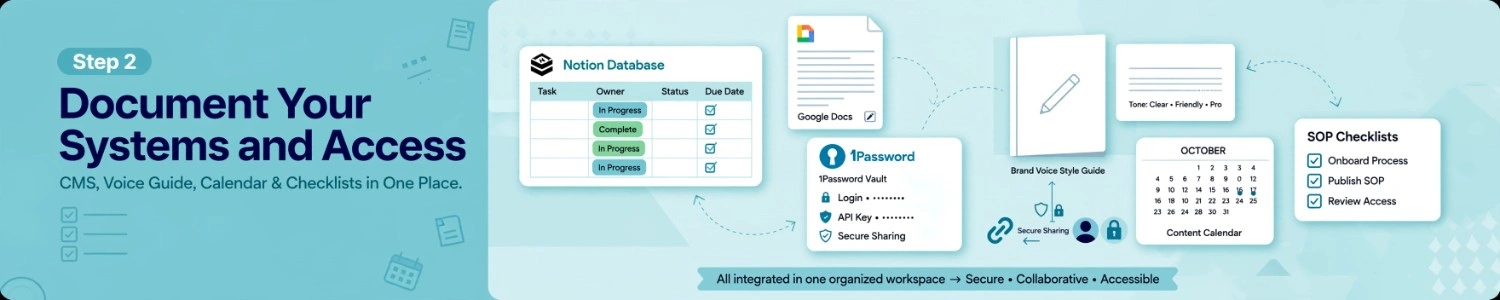
Create a shared document (Notion, Google Docs, or Confluence) that includes:
- CMS login credentials (use a password manager like 1Password for secure sharing)
- Style guide and voice document
- Content calendar template
- Keyword research process
- Publishing checklist
Step 3 – Define Roles and Ownership
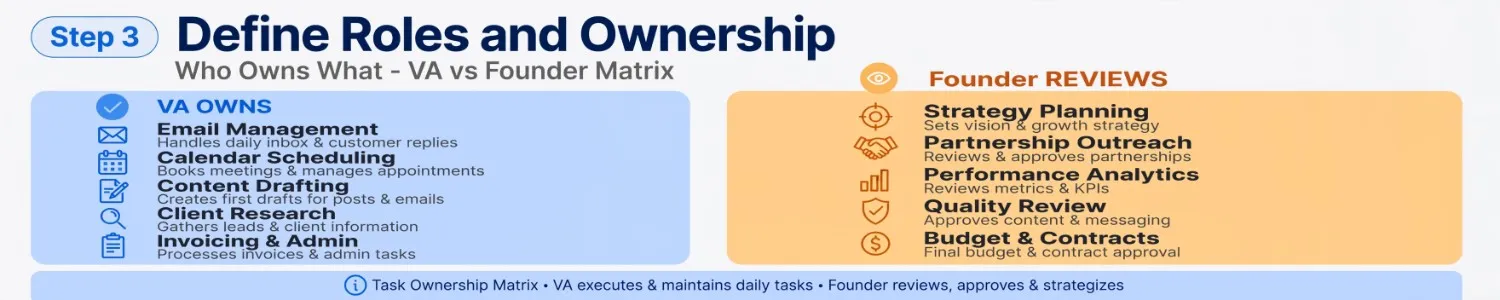
Be explicit about what your VA owns versus what you review. A common structure looks like this:
| Task | VA Owns | Founder Reviews |
|---|---|---|
| Topic ideation | Yes | Monthly approval |
| Keyword research | Yes | No |
| Content brief | Yes | Spot-check |
| First draft | Yes | Yes (early phase) |
| SEO optimization | Yes | No |
| CMS publishing | Yes | No |
| Performance reporting | Yes | Monthly |
As trust builds, the “Founder Reviews” column shrinks. The goal is eventual full delegation.
Step 4 – Establish a Content Calendar
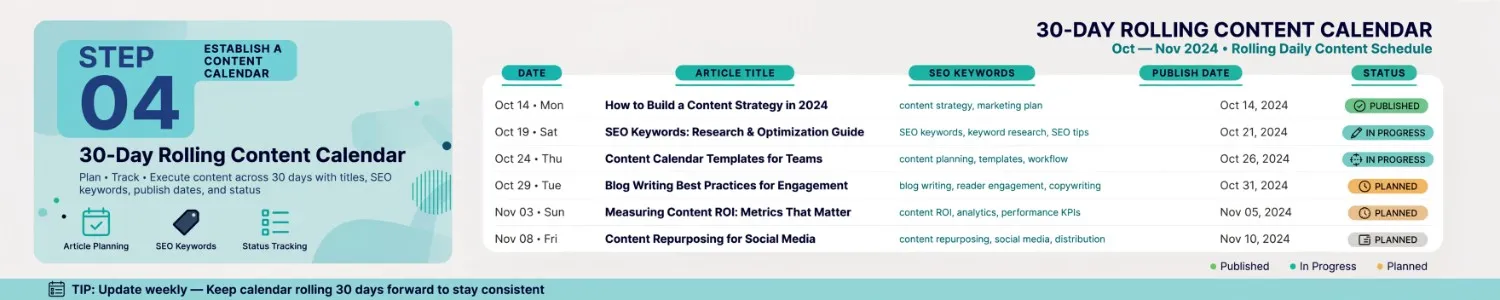
A 30-day rolling content calendar gives your VA a clear production roadmap. It should include:
- Article title and target keyword
- Primary audience intent (informational, commercial, navigational)
- Target publish date
- Status (brief, in progress, draft review, published)
- Internal linking targets
Step 5 – Create a Brief Template

A content brief is your VA’s blueprint for every article. A strong brief includes:
- Working title and target keyword
- Secondary and semantic keywords
- Audience intent and search context
- Suggested H2/H3 structure
- Key points to cover
- Internal links to include
- Outbound link recommendations
- Target word count
- CTA direction
Step 6 – Set Up a Feedback Loop
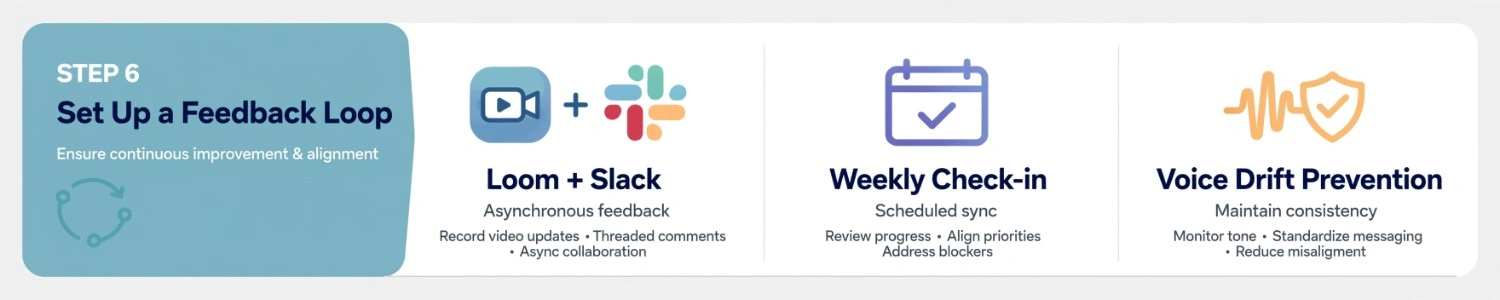
Regular, structured feedback prevents voice drift over time. Schedule a short weekly check-in during the onboarding phase, then move to bi-weekly once the workflow is running smoothly. Use a shared Loom or Slack thread for asynchronous feedback on specific drafts.
Step 7 – Track and Optimize

Content that does not get measured does not get better. Set up a simple monthly reporting structure where your VA pulls:
- Organic traffic by article
- Keyword ranking changes
- Time on page and bounce rate
- Conversion events tied to blog CTAs
Use Google Search Console as your primary free performance tracking tool, supplemented by your analytics platform of choice.
Comparison: Managing Your Blog Yourself vs. Delegating to a Virtual Marketing Assistant
| Factor | DIY Blog Management | Blog Writing Virtual Assistant |
|---|---|---|
| Time investment | 10-20+ hours/month | 1-2 hours/month (oversight only) |
| Publication consistency | Irregular | Consistent and scheduled |
| SEO optimization depth | Variable | Systematic and thorough |
| Content volume | 1-2 posts/month | 4-8+ posts/month |
| Voice consistency | High (you write it) | High (with proper onboarding) |
| Scalability | Low | High |
| Cost | Time cost only | Predictable monthly retainer |
| Burnout risk | High | Low |
The comparison makes the business case clearly. Delegation is not just a convenience – it is a strategic leverage decision.
Common Mistakes Business Owners Make When Delegating Their Blog
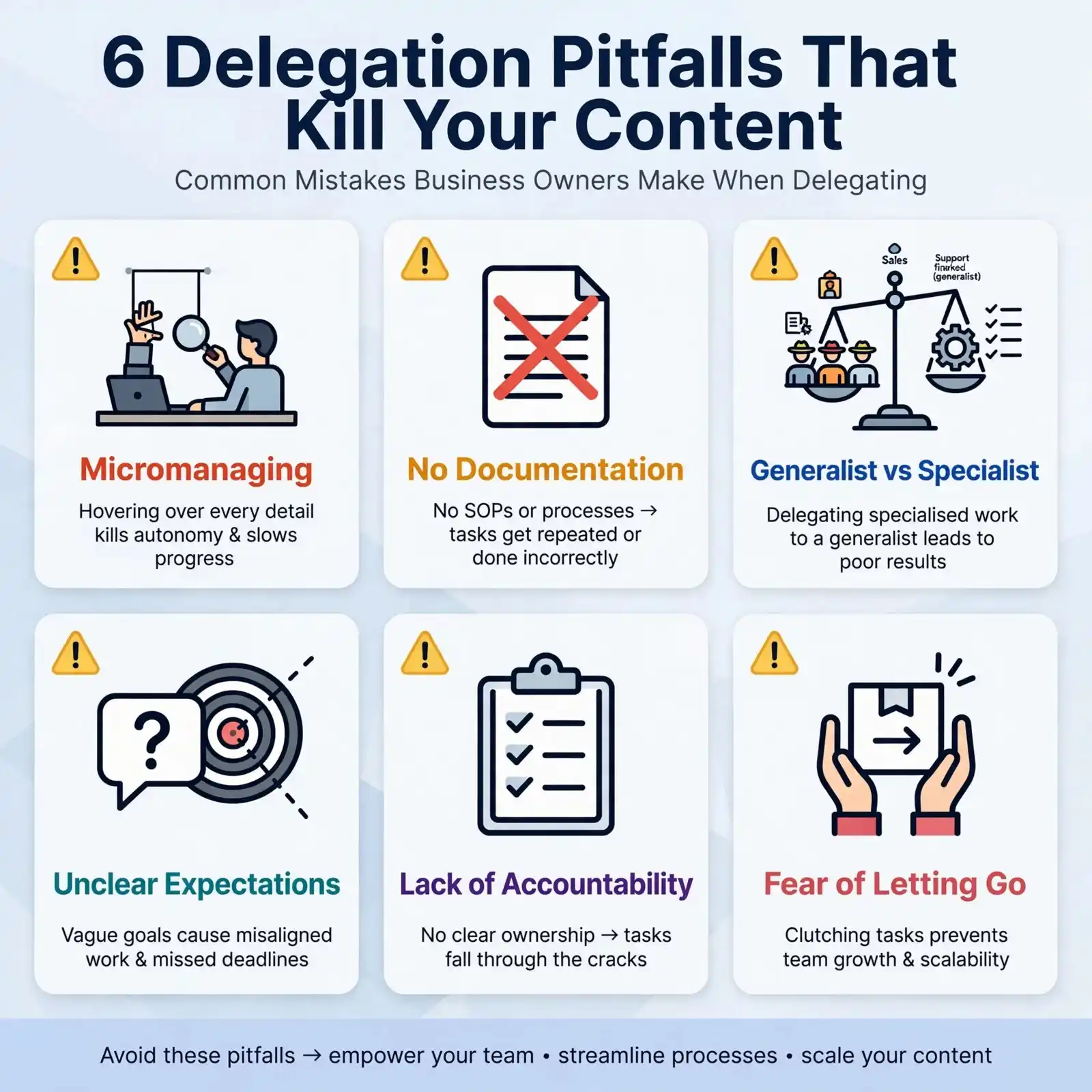
Even with the best intentions, founders make predictable errors when handing off their content. Here are the most frequent ones:
Mistake 1: Delegating before documenting
Handing over your blog without a voice guide or style document sets your VA up to fail. Document first, then delegate.
Mistake 2: Expecting perfection on the first draft
The calibration period requires patience. Plan for revision cycles in the first month and treat them as investment in a long-term asset.
Mistake 3: Micromanaging the process
If you are rewriting every paragraph, you are not delegating – you are doing the work twice. Trust the process and provide structured feedback, not wholesale rewrites.
Mistake 4: Neglecting keyword research handoff
Many founders hand over writing but keep keyword research to themselves, creating a bottleneck. Train your VA in your keyword research process and tools.
Mistake 5: Skipping performance reviews
Content that never gets evaluated never improves. Build performance reviews into your monthly rhythm.
Mistake 6: Choosing a generalist over a content specialist
A general VA and a blog writing virtual assistant are not the same. Look specifically for candidates with demonstrated SEO content experience, writing samples in your industry, and familiarity with your CMS.
What to Look for When Hiring a Blog Writing Virtual Assistant
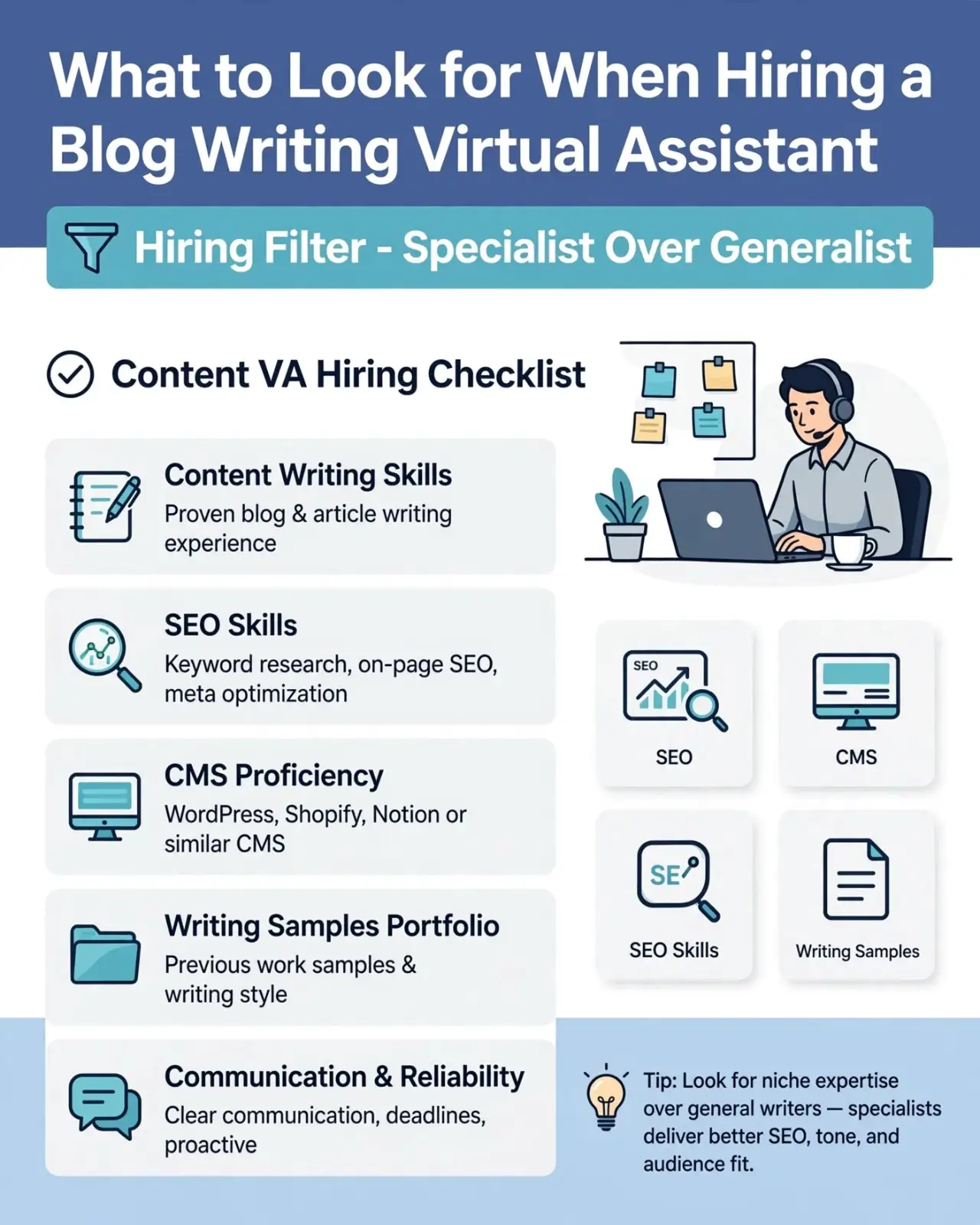
Not all virtual assistants are equipped for content marketing. When evaluating candidates, prioritize these qualifications:
- Writing samples in your niche or adjacent industries
- Demonstrated understanding of on-page SEO (keyword placement, meta tags, internal linking)
- Experience with your CMS (WordPress, HubSpot, Webflow, etc.)
- Familiarity with keyword research tools (SEMrush, Ahrefs, or Ubersuggest)
- Strong editorial judgment – can they improve a brief, not just follow one?
- Communication style that matches your workflow (async vs. synchronous)
- A track record of consistent delivery against editorial deadlines
Ask for a paid test assignment before committing to a long-term engagement. A 500-800 word article on a topic you know well tells you everything you need to know about fit.
Expert Tips for Maximizing the Value of Your Blog VA

Tip 1 – Record yourself talking about topics
If voice calibration is slow, record 5-10 minute voice memos where you talk through a topic conversationally. Give these recordings to your VA as a raw source. The result often sounds more naturally like you than written briefs alone.
Tip 2 – Build a “swipe file” of your best writing
Compile 10-15 of your best paragraphs, intros, and closings. Label what makes each one work. This becomes a living reference library for your VA.
Tip 3 – Use AI tools as a first-pass assistant, not a final product
Tools like ChatGPT or Claude can help your VA create rough outlines or generate variations – but the published article should always reflect human editorial judgment and original insight. According to Moz, search engines increasingly reward content that demonstrates genuine expertise and original perspective.
Tip 4 – Gradually expand the scope
Start with blog drafting, then add social repurposing, then email adaptation. Expanding scope in stages reduces risk and builds confidence on both sides.
Tip 5 – Celebrate consistency over perfection
A consistent publishing cadence – even at 90% of ideal – outperforms sporadic perfect posts every time in terms of SEO compound growth.
Maintaining Your Voice Over Time: Ongoing Quality Control
Delegation is not a one-time setup. It is a system that requires periodic maintenance.
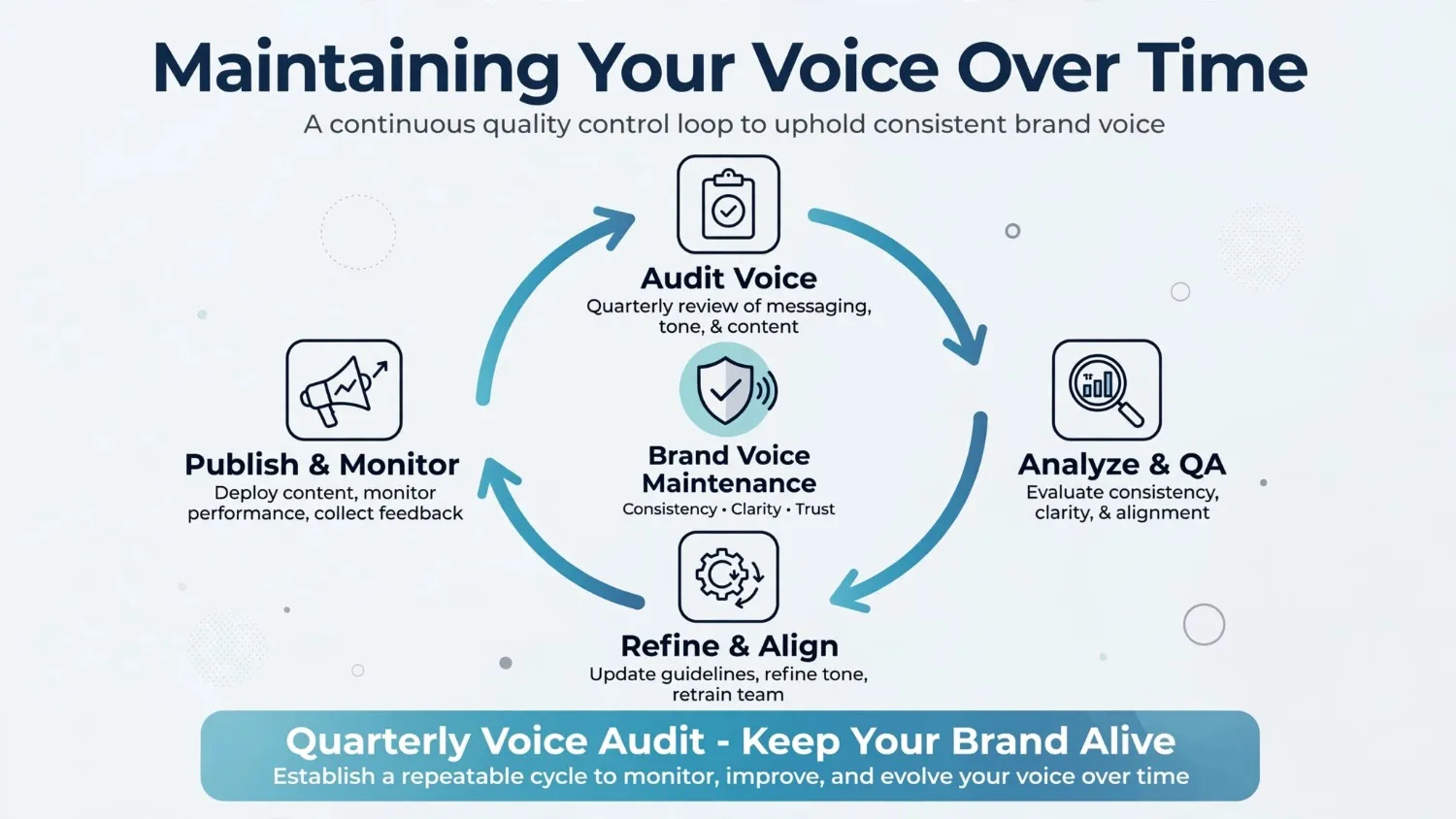
Schedule a quarterly voice audit where you:
- Read 3-4 recent posts as if you are a new reader
- Check whether the tone, vocabulary, and perspective still feel authentic
- Update the voice guide to reflect how your thinking or positioning has evolved
- Share any new examples of content you admire
Your brand voice is a living thing. It evolves as your business grows. Build the habit of refreshing your documentation so your VA always has an accurate reference point.
FAQ: Blog Writing Virtual Assistant
Q: What is a blog writing virtual assistant?
A blog writing virtual assistant is a remote content specialist who manages some or all of your blog operation, including topic research, SEO-optimized writing, CMS publishing, and performance tracking. Unlike a general VA, a blog writing virtual assistant has specific expertise in content marketing and search engine optimization.
Q: How do I maintain my voice when using a blog writing virtual assistant?
The key is documentation. Create a detailed brand voice guide before onboarding your VA, run a structured calibration process across the first 3-5 articles, and provide specific written feedback rather than vague direction. Most skilled VAs can accurately replicate a documented voice within a few weeks.
Q: How much does a blog writing virtual assistant cost?
Rates vary based on experience, scope, and location. Specialized content-focused virtual marketing assistant services typically operate on monthly retainers that cover a defined number of articles and hours, making budgeting predictable and straightforward.
Q: How long does it take to fully hand off a blog?
With a proper onboarding system – voice guide, content calendar, brief template, and CMS access – most business owners achieve full operational handoff within 4-6 weeks. The calibration phase for voice takes slightly longer: expect 3-5 articles before drafts require minimal revision.
Q: Can a blog writing virtual assistant handle SEO as well?
Yes – a content-specialized VA should handle on-page SEO as a core part of every article. This includes keyword placement, meta title and description, URL slug, header hierarchy, internal and external linking, and image alt text optimization. Technical SEO (site architecture, page speed, crawlability) is typically handled separately by an SEO specialist or developer.
Q: Is it better to hire a freelance writer or a blog writing virtual assistant?
A freelance writer typically delivers only the written content. A blog writing virtual assistant takes broader ownership – managing the editorial calendar, handling SEO, publishing within your CMS, and reporting on performance. If you want to fully delegate your blog rather than just outsource writing, a VA is the more comprehensive solution.
Build a Blog That Runs Without You
Your blog should be an asset that grows your business 24 hours a day, not a task that drains your weekly schedule. The technology, the talent, and the systems to make that happen are all available right now. What stands between you and a fully delegated, voice-consistent, high-performing content operation is a documented process and the right person to run it.
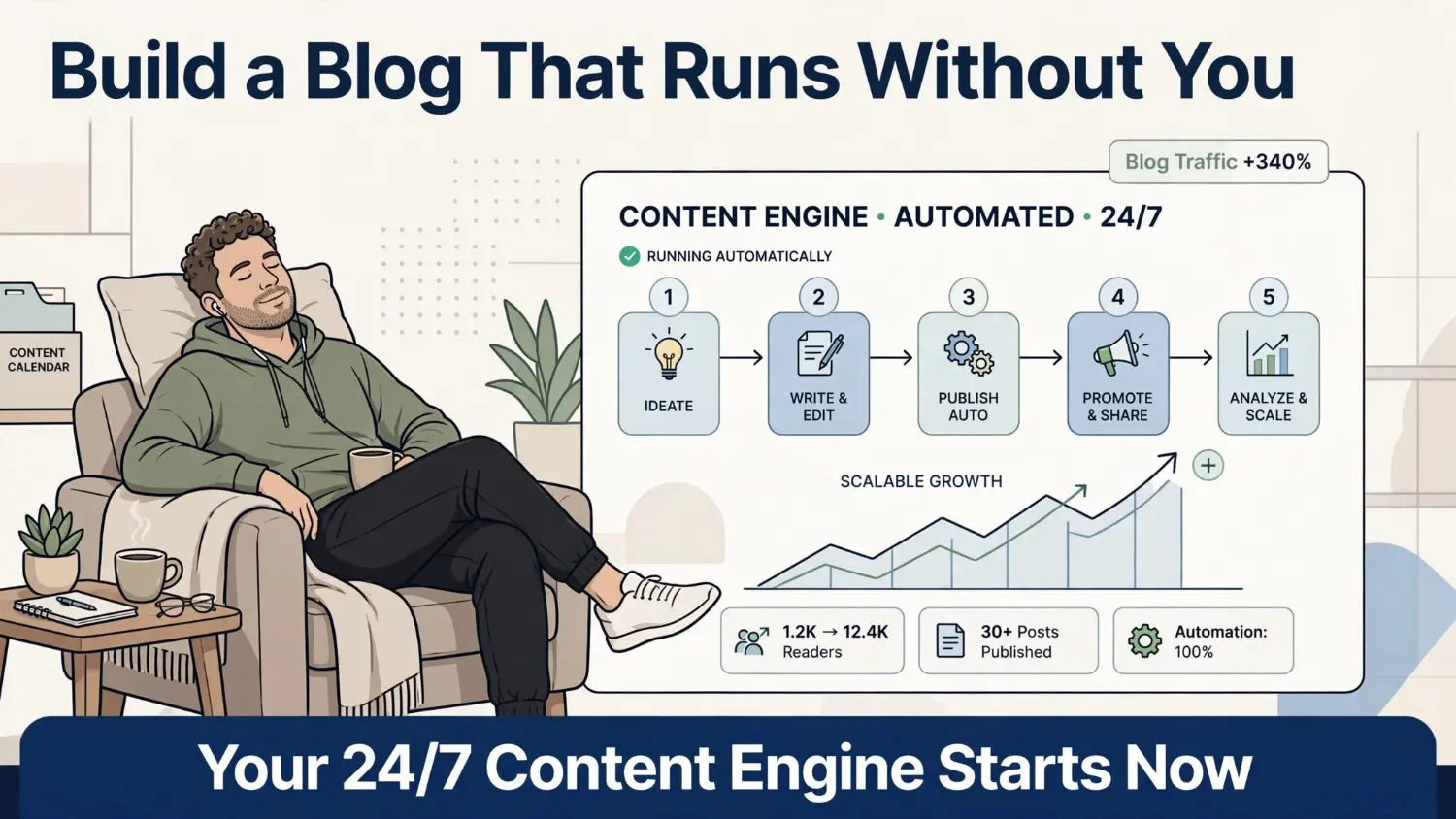
Start with your brand voice guide. Build your first content brief template. Then bring in a specialist who can own the execution while you focus on the strategy, the relationships, and the decisions that only you can make.
Ready to stop writing every post yourself and start building a content engine that works while you lead? Explore professional and discover how YRANO helps business owners delegate their entire blog without losing the voice that makes their brand stand out.
Pingback: 22 WordPress Tasks to Delegate to a Virtual Marketing Assistant Today